Co-Branding and Cause Marketing

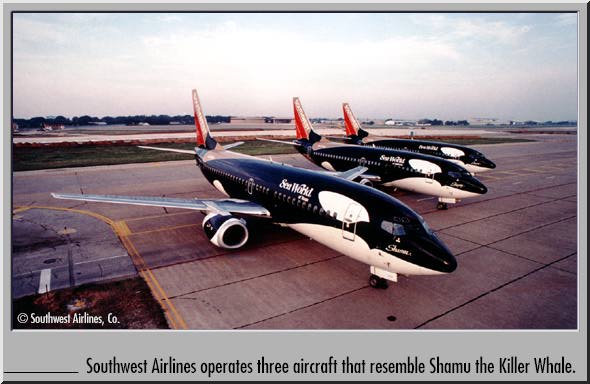
Five or six years ago the term 'co-branding' was one of those hot marketing buzzwords. Nowadays co-branding is so commonplace as to be mundane. The point of co-branding is for brands to combine such that they create notable synergy.

There are several kinds of co-branding, including cause marketing itself.

This article, from Tiger Woods' previous sponsor, Accenture, names six:
Value-Chain, which is meant to bring new experiences to the consumer, not just another flavor. There are three varieties of value-chain co-branding:
In short, co-branding is common and familiar.

Less common is co-branding between more than two brands. That's because the more brands you add, the more inertia there is to overcome. Co-branding with more than two brands is like a trade between three or more professional sports teams whereby six or eight or ten players change teams. Those deals tend to make the news because everyone understands that they're so hard to put together in a way that satisfies all the parties.

So this promotion from caught my eye. It was in a recent sales flyer from the discount retailer Target. When you buy a Hasbro toy or game from the featured page, Hasbro will make a make a donation of 5 percent of the purchase price to the Salvation Army.

Target's usual national charity of choice is the St. Jude Children's Research Hospital. But it has long been a supporter of the Salvation Army. However in 2004 Target quit allowing Sally Ann kettle ringers in front of its stores because it had a strict no-soliciting policy but had made an exception for the Salvation Army.

Since the kettle campaign makes up as much as 70 percent of the Salavation Army's fundraising, losing a major retailer was a blow. Target responded with a multi-element fundraising campaign that includes online support of the Salvation Army's Angel Tree effort.

As a result, I suspect that it was Target which made this deal happen rather than Hasbro or the Salvation Army.

Regardless, I'm glad to see the Salvation Army get the support. It's a charity I have long admired for its effectiveness, efficiency, breadth of services and depth of genuine human
compassion.

If you're looking for a broad-based domestic charity to support this holiday season, I don't believe you could do better than the Salvation Army.

Comments

Maggie Keenan said…
This comment has been removed by a blog administrator.
Maggie Keenan said…
This comment has been removed by a blog administrator.

Popular posts from this blog

Part 2: How Chili's Used Cause-Related Marketing to Raise $8.2 million for St. Jude

[Bloggers Note: In this second half of this post I discuss the nuts and bolts of how Chili's motivates support from its employees and managers and how St. Jude 'activates' support from Chili's. Read the first half here.] How does St. Jude motivate support from Chili’s front line employees and management alike? They call it ‘activation’ and they do so by the following: They share stories of St. Jude patients who were sick and got better thanks to the services they received at the hospital. Two stories in particular are personal for Chili’s staff. A Chili’s bartender in El Dorado Hills, California named Jeff Eagles has a younger brother who was treated at St. Jude. In both 2005 and 2006 Eagles was the campaign’s biggest individual fundraiser. John Griffin, a manager at the Chili’s in Conway, Arkansas had an infant daughter who was treated for retinoblastoma at St. Jude. They drew on the support Doug Brooks… the president and CEO of Brinker International, Chili’s parent co...

Cause-Related Marketing with Customer Receipts

Walgreens and JDRF Right now at Walgreens…the giant pharmacy and retail store chain with more than 5,800 stores in the United States and Puerto Rico… they’re selling $1 paper icons for the Juvenile Diabetes Research Foundation (JDRF). This is an annual campaign and I bought one to gauge how it’s changed over the years. (Short list… they don’t do the shoe as a die cut anymore; the paper icon is now an 8¾ x 4¼ rectangle. Another interesting change; one side is now in Spanish). The icon has a bar code and Jacob, the clerk, scanned it and handed me a receipt as we finished the transaction. At the bottom was an 800-number keyed to a customer satisfaction survey. Dial the number, answer some questions and you’re entered into a drawing for $10,000 between now and the end of September 2007. I don’t know what their response rate is, but the $10,000 amount suggests that it’s pretty low. Taco Bell’s survey gives out $1,000 per week. At a regional seafood restaurant they give me a code that garner...

An Interview with Cause-Related Marketing Pioneer Jerry Welsh

Jerry Welsh is the closest thing cause marketing has to a father. In 1983 after a number of regional cause-related marketing efforts, Welsh, who was then executive vice president of worldwide marketing and communications at American Express looked out his window in lower Manhattan at the Statue of Liberty. The Statue was then undergoing a major refurnishing, and in a flash Welsh determined to undertake the first modern national cause marketing campaign. I say modern because almost 100 years before in January 1885, the Statue of Liberty was sitting around in crates in New York warehouses because the organization building the pedestal ran out of money. And so Joseph Pulitzer, the publisher of the newspaper called The World , proposed a very grassroots solution reminiscent in its own way to Welsh’s cause-related marketing. Pulitzer ran an editorial promising he would print the name of everyone who donated even a penny. Sure enough pennies, along with dimes and nickels, quarters a...