
Why Company-Named foundations Benefiting from Cause-Related Marketing Rub Me the Wrong Way.
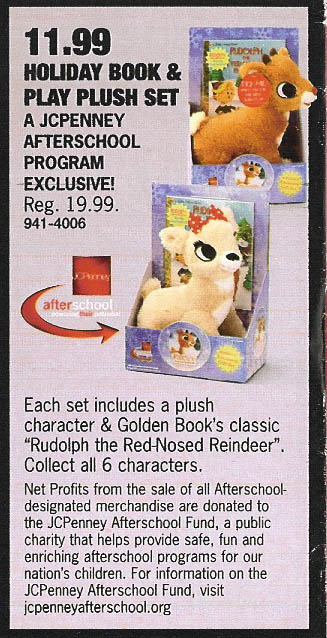
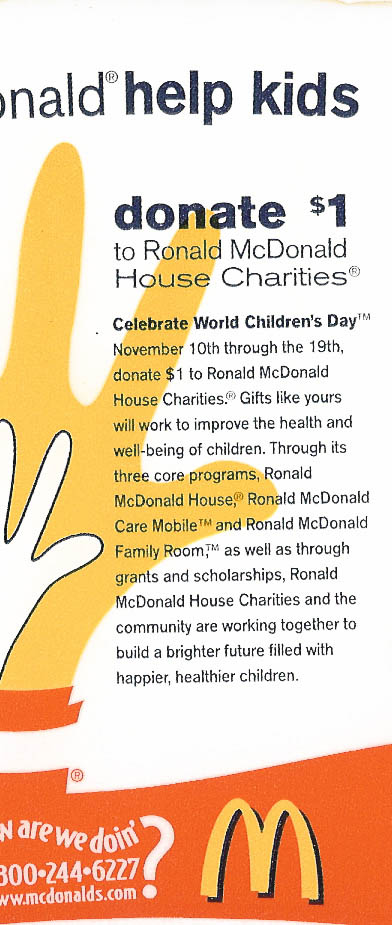
Just this month I’ve seen cause-related marketing campaigns for McDonalds and the Ronald McDonald House Children’s Charities; PETCO, and the PETCO Foundation; and, JC Penney and the JCPenney Afterschool Fund.
Two other general merchandise retailers, Kohls and Mervyns, run ‘charity-flavored’ campaigns through their community relations departments. The Kohl’s program, called Kohl’s Cares for Kids, supports child injury prevention and immunization programs, and children’s hospitals. Kohl’s Cares for Kids is not an actual charity, although like JCPenney Afterschool Fund it uses the sales of plush toys to fund their campaigns.
I don’t want this to be a 2,000-word post, so I’ll concentrate on the JCPenney Afterschool Fund. The organization, a 501(c)(3) public charity was formed in 1999 and “dedicated to ensuring that every child is safe and constructively engaged during the afternoon hours,” says the website.
Along with the National Football League, they sponsor the NFL Take a Player to School Sweepstakes for kids age 6-13. They also support the JCPenney JAM: Concert for America’s Kids. The June 2006 event was hosted by Dr. Phil and produced by fancy-pants Hollywood producer David Foster. Acts incuded Sting, Mary J. Blige, 3 Doors Down, Kenny Chesney and others. The concert along with behind the scenes footage is available from jcp.com for $14.99.
“In 2006” the website informs us, the “JCPenney Afterschool Fund grants will provide over 10,000 children with access to safe, enriching aftershool programs,” through their partnerships with Boys & Girls Clubs of America, YMCA of the USA, National 4-H Council and United Way of America.
In 2005, the JCPenney Afterschool Fund’s audited financial statements said they took in $11.4 million and spent $6.5 million on program expenses. That is, they spent $6.5 million on their mission.
Why does this rub me the wrong way?
Because you and I are paying for all this. Everyone that attends the JCPenney Afterschool Fund’s annual gala, or buys the plush toys or the DVD of the JCPenney Jam is paying for it.
And while kids benefit, so too does the JCPenney corporation. Because by naming the charity the JCPenney Afterschool Fund, they ensured that their name gets plastered all over everything the charity does.
JCPenney corporate gets a halo and you and I pay for it.
Wait a minute, you say, cause-related marketing is about trading a nonprofit’s halo for a company’s cash. True enough. But I would argue that JCPenney is being too clever by half.
People instinctively realize that JCPenney is playing both sides of the fence. And so, while the cause-related campaigns apparently do fine I predict that they'll probably underperform. That is, that they could do even better if they weren’t tethered by the JCPenney name.
Secondly and ironically, the halo to JCPenney corporate would be bigger and brighter if the charity were not named for the company.
Just this month I’ve seen cause-related marketing campaigns for McDonalds and the Ronald McDonald House Children’s Charities; PETCO, and the PETCO Foundation; and, JC Penney and the JCPenney Afterschool Fund.
Two other general merchandise retailers, Kohls and Mervyns, run ‘charity-flavored’ campaigns through their community relations departments. The Kohl’s program, called Kohl’s Cares for Kids, supports child injury prevention and immunization programs, and children’s hospitals. Kohl’s Cares for Kids is not an actual charity, although like JCPenney Afterschool Fund it uses the sales of plush toys to fund their campaigns.
I don’t want this to be a 2,000-word post, so I’ll concentrate on the JCPenney Afterschool Fund. The organization, a 501(c)(3) public charity was formed in 1999 and “dedicated to ensuring that every child is safe and constructively engaged during the afternoon hours,” says the website.
Along with the National Football League, they sponsor the NFL Take a Player to School Sweepstakes for kids age 6-13. They also support the JCPenney JAM: Concert for America’s Kids. The June 2006 event was hosted by Dr. Phil and produced by fancy-pants Hollywood producer David Foster. Acts incuded Sting, Mary J. Blige, 3 Doors Down, Kenny Chesney and others. The concert along with behind the scenes footage is available from jcp.com for $14.99.
“In 2006” the website informs us, the “JCPenney Afterschool Fund grants will provide over 10,000 children with access to safe, enriching aftershool programs,” through their partnerships with Boys & Girls Clubs of America, YMCA of the USA, National 4-H Council and United Way of America.
In 2005, the JCPenney Afterschool Fund’s audited financial statements said they took in $11.4 million and spent $6.5 million on program expenses. That is, they spent $6.5 million on their mission.
Why does this rub me the wrong way?
Because you and I are paying for all this. Everyone that attends the JCPenney Afterschool Fund’s annual gala, or buys the plush toys or the DVD of the JCPenney Jam is paying for it.
And while kids benefit, so too does the JCPenney corporation. Because by naming the charity the JCPenney Afterschool Fund, they ensured that their name gets plastered all over everything the charity does.
JCPenney corporate gets a halo and you and I pay for it.
Wait a minute, you say, cause-related marketing is about trading a nonprofit’s halo for a company’s cash. True enough. But I would argue that JCPenney is being too clever by half.
People instinctively realize that JCPenney is playing both sides of the fence. And so, while the cause-related campaigns apparently do fine I predict that they'll probably underperform. That is, that they could do even better if they weren’t tethered by the JCPenney name.
Secondly and ironically, the halo to JCPenney corporate would be bigger and brighter if the charity were not named for the company.
Comments
Thanks for your comments.
I agree that corporate philanthropy needs to be encouraged at every turn.
Especially now at this writing (10/19/2009) when so many charities need help to fulfill their missions.
My argument in this post was not meant to discourage corporate philanthropy in any way. Quite the opposite.
I meant only to encourage companies to support nonprofit charities other than the ones with whom they share a common name.
I argued also that supporting their eponymous charities is in fact self-defeating because they don't receive the third-party endorsement implicit in supporting a non-affiliated charity.
Again, thanks for your comments.
Warm regards,
Paul